Trend vs Range Market Regimes Through Forex Market Structure
One of the fastest ways traders lose money is by using the wrong approach for the current market environment. For example, applying a trend strategy in a ranging market—or a range strategy in a trend—almost always leads to frustration. This is precisely why understanding forex market structure is essential.
Markets constantly shift between conditions. However, those shifts are not random. Instead, they are revealed through market structure in forex trading. Once structure is identified, the market clearly communicates what it is offering.
How Forex Market Structure Defines a Trending Market
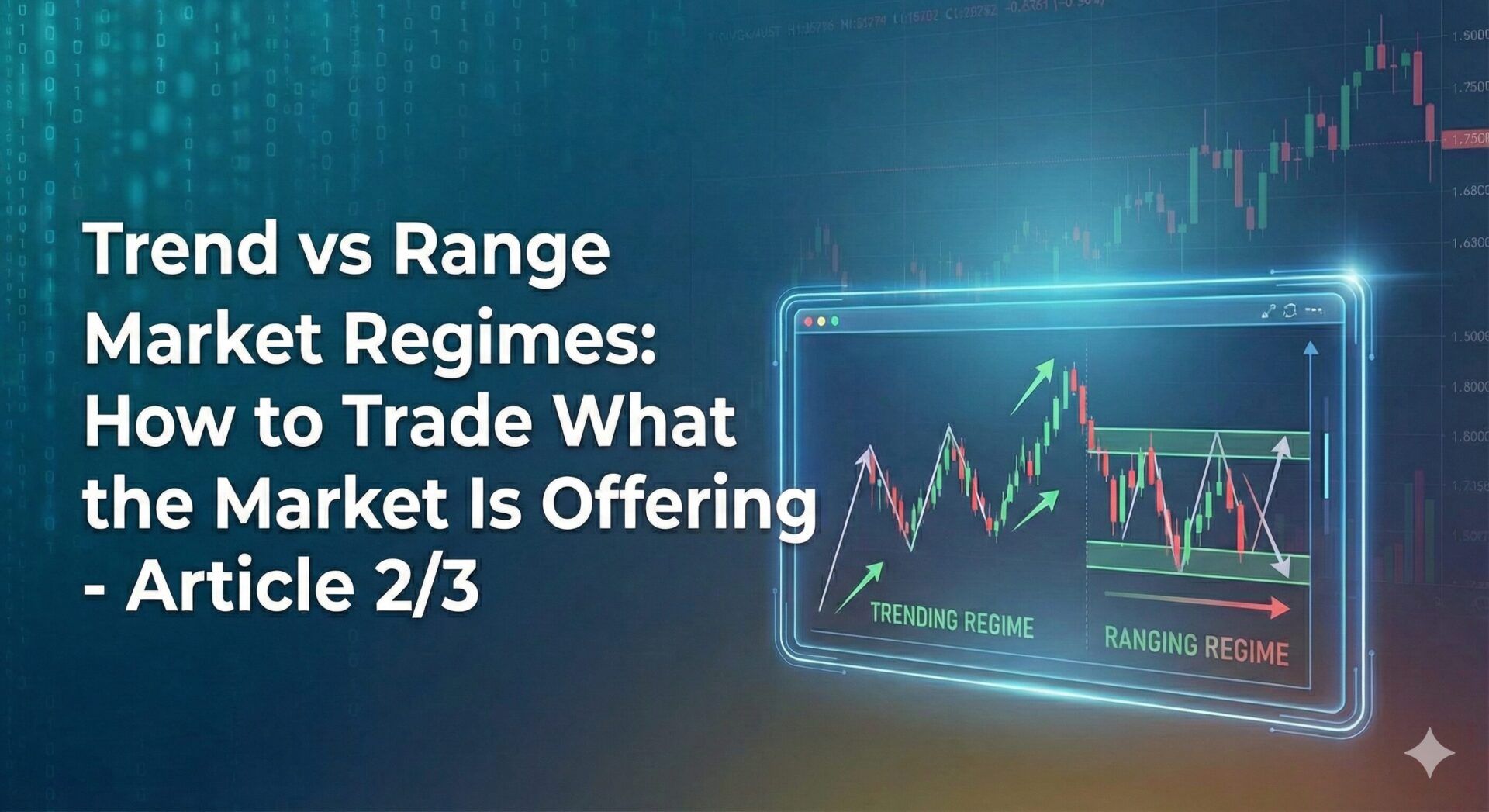
A trending market is defined by directional commitment. Price moves with purpose, and the forex market structure confirms that direction.
In a bullish structure, price forms higher highs and higher lows. Resistance is broken, then respected as support. This repeated behavior signals buyer control and a healthy trend.
In contrast, a bearish forex structure forms when price creates lower highs and lower lows. Support breaks, becomes resistance, and price continues lower after pullbacks. Sellers remain in control.
These two behaviors represent primary types of market structure in forex, and recognizing them allows traders to stop guessing and start aligning with price.
Why Trending Forex Market Structure Creates Clarity
Trending conditions offer clarity because structure defines risk and invalidation. Once a level breaks and holds as a zone, traders know exactly where the idea fails.
As a result, stop losses can be placed logically beyond structural zones. This allows price to fluctuate naturally without forcing premature exits. Moreover, trending forex market structures reduce emotional decision-making because bias is already defined.
Instead of asking where price might go, traders focus on executing pullbacks that align with market structure in forex trading.
Understanding Range-Bound Forex Market Structure
While trends are directional, ranges are neutral. A ranging market forms when price lacks commitment and remains trapped between support and resistance zones. This behavior represents another major type of market structure in forex.
In ranging conditions, breakouts frequently fail. Price may move beyond a level briefly, only to return inside the range. Therefore, traders who misread the forex structure often get trapped buying highs or selling lows.
Range trading requires patience. Instead of expecting continuation, traders anticipate rejection at the boundaries of the structure.
Why Zones Are Critical in Range Structures
Ranges expose traders who treat levels as exact lines. In reality, price often trades deep into a zone before reversing. Consequently, tight stops get hit even when structure remains intact.
By respecting zones within the foreign exchange market structure, traders allow room for natural price movement. This flexibility filters out false breakouts and improves trade quality.
In range environments, execution becomes reactive rather than predictive. Price reaches a zone, shows rejection, and structure guides the decision.
Transitioning Between Forex Market Structures
Markets do not remain in trends or ranges forever. In fact, ranges often precede trends, while trends eventually lose momentum and consolidate. These transitions are where confusion usually arises.
A breakout alone does not confirm a new trend. Instead, forex market structure must shift. Confirmation occurs only when price breaks a level and later respects it as a new zone.
This structural acceptance is what separates genuine regime changes from temporary volatility.
News Events and Forex Market Structure Shifts
High-impact news often acts as a catalyst for structural change. However, news does not create sustainable moves by itself. Structure must support the expansion.
When price is already near a key structural level, news can accelerate the transition. When structure and fundamentals align, the probability of continuation increases significantly.
Therefore, traders who understand market structure in forex trading prepare scenarios in advance instead of reacting emotionally after the move begins.
Adapting Execution Without Changing Strategy
Many traders believe they need different strategies for different conditions. In reality, the same tools apply across all forex market structures. What changes is execution.
In trends, traders focus on pullbacks and continuation. In ranges, they focus on rejection and mean reversion. The structure stays the same. The expectation changes.
This adaptability is what creates consistency.
Closing Thoughts for Part Two
Trend and range conditions are not problems to solve. They are simply expressions of forex market structure. Traders who recognize them early stop forcing trades and start flowing with price behavior.
Understanding when to press and when to wait is what separates reactive traders from consistent ones.
In the final article, we will explore how traders navigate forex market structure during transitions and volatility, and how to maintain control when price accelerates.
Useful Links
- Learn this lesson and more with the Complete A to Z Forex Course
- Automate Your Trading with the Award Winning Patrex Pro Forex Bot