Understanding Risk management in futures trading is one of the most important skills any trader can develop.
Risk Management in Futures Trading: 9 Powerful Rules Every Trader Must Follow
Introduction to Risk Management in Futures Trading
Understanding Risk management in futures trading is one of the most important skills any trader can develop.
Futures markets provide powerful opportunities because they allow traders to control large positions using leverage. However, this leverage also means that losses can occur quickly if trades are not managed carefully.
Many new traders focus on finding the perfect strategy or predicting market direction. Experienced traders, on the other hand, understand that long-term success depends on controlling risk rather than chasing profits.
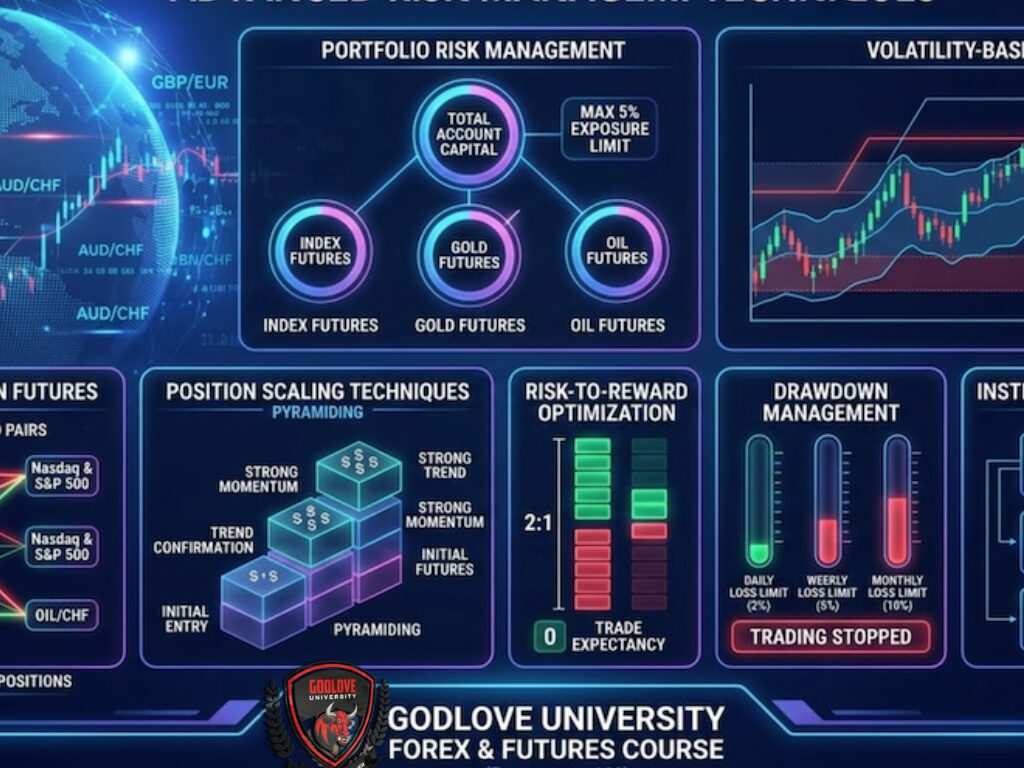
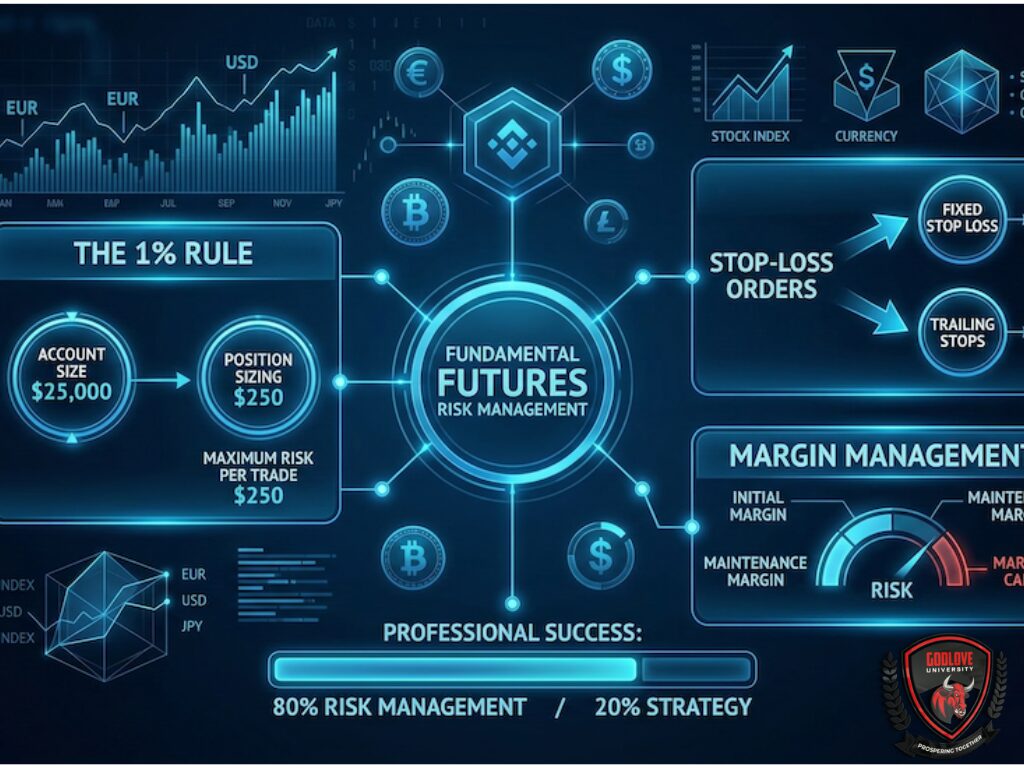
Professional traders often say that successful trading is 80% risk management and 20% strategy. This mindset helps protect trading capital and allows traders to survive market volatility.
Major futures exchanges such as the Chicago Mercantile Exchange provide access to markets including stock indices, commodities, and currencies. These markets move rapidly, making strong risk management essential.
Why Futures Trading Is High Risk
Futures trading can produce large gains, but it also involves significant risk.
The Importance of Risk Control
Unlike traditional investing, futures contracts are leveraged instruments. This means traders only need to deposit a small percentage of the contract value to control a much larger position.
For example:
Contract Value | Margin Required | Actual Exposure |
$100,000 | $5,000 | Full $100,000 market exposure |
This leverage magnifies both profits and losses. Without proper risk management, traders can quickly lose their trading capital.
Understanding Leverage in Futures Markets
Leverage is one of the main reasons traders choose futures markets.
How Leverage Amplifies Risk
Leverage allows traders to control large contracts with relatively small deposits. However, even small market movements can produce large changes in account value.
For example:
Market Move | Result Without Leverage | Result With Futures Leverage |
1% move | Small gain/loss | Large gain/loss |
5% move | Moderate change | Major account impact |
Because of this, Risk management in futures trading must always consider leverage exposure.
Margin and Exposure
Futures trading requires margin deposits.
Two key types include:
- Initial margin – the amount needed to open a position
- Maintenance margin – the minimum balance required to keep the trade open
If your account falls below the maintenance margin, brokers issue a margin call, requiring additional funds.
Position Sizing Basics
Position sizing determines how much capital is risked on each trade.
The 1% Rule
One of the most widely used risk management rules is the 1% rule.
This rule suggests traders should risk no more than 1% of their total trading capital on a single trade.
Example:
Account Size | Maximum Risk Per Trade |
$5,000 | $50 |
$10,000 | $100 |
$25,000 | $250 |
This approach protects traders from large losses during losing streaks.
Scaling Positions
Instead of entering a large position immediately, traders can scale positions gradually.
Example scaling plan:
Entry Stage | Contracts |
Initial entry | 1 contract |
Confirmation | 2 contracts |
Strong trend | 3 contracts |
Scaling helps manage risk while allowing traders to increase exposure when trades move in their favor.
Stop-Loss Strategies
Stop-loss orders are one of the most important tools in Risk management in futures trading.
Fixed Stop Loss
A fixed stop loss closes a trade automatically if price reaches a predetermined level.
Example:
Entry Price | Stop Loss | Risk |
15,000 | 14,980 | 20 points |
This ensures traders know their maximum loss before entering a trade.
Trailing Stops
Trailing stops move with the market as the trade becomes profitable.
Benefits include:
- Locking in profits
- Reducing emotional decision-making
- Protecting against sudden reversals
Many professional traders rely heavily on trailing stop systems.
Managing Margin Requirements
Margin management is another key component of Risk management in futures trading.
Initial Margin
The initial margin is required to open a futures position.
Margins vary depending on the contract and exchange.
Maintenance Margin
Maintenance margin represents the minimum balance needed to maintain an open position.
If losses reduce account equity below this level, traders must deposit additional funds.
Failing to meet a margin call may result in forced position liquidation.
Diversification in Futures Trading
Many traders reduce risk by diversifying across markets.
Trading Multiple Markets
Instead of focusing on a single market, traders may spread exposure across different asset classes:
Market Type | Examples |
Stock Index Futures | S&P 500, Nasdaq |
Commodity Futures | Gold, Oil |
Currency Futures | Euro, Yen |
Diversification reduces the impact of large losses in a single market.
Emotional Risk Management
Psychology plays a major role in trading success.
Avoiding Revenge Trading
Revenge trading occurs when traders attempt to recover losses quickly by increasing position size.
This behavior often leads to even larger losses.
Professional traders focus on:
- discipline
- patience
- strict adherence to risk rules
Tools for Managing Risk
Modern trading platforms offer tools that help traders manage risk effectively.
Risk Calculators
Risk calculators help determine:
- optimal position size
- stop-loss distance
- capital exposure
Using these tools can improve decision-making and reduce emotional trading.
Frequently Asked Questions
What is risk management in futures trading?
It is the process of controlling potential losses through position sizing, stop losses, and disciplined trading strategies.
Why is risk management important in futures trading?
Because futures markets use leverage, even small price movements can produce large gains or losses.
What is the 1% rule in trading?
The 1% rule limits risk to no more than 1% of total capital per trade.
Can traders succeed without risk management?
Long-term success is extremely unlikely without strict risk control.
What tools help manage trading risk?
Stop-loss orders, position sizing calculators, and trading plans are commonly used tools.
How do professionals manage trading risk?
Professional traders follow strict risk limits, diversify exposure, and avoid emotional decision-making.
Conclusion
Mastering Risk management in futures trading is the foundation of long-term success in derivatives markets.
Successful traders focus on:
- controlling leverage
- managing position size
- using stop-loss orders
- maintaining emotional discipline
By prioritizing risk control over short-term profits, traders can protect their capital and survive the inevitable ups and downs of the futures markets.
In Part 2/3, we will explore:
- Advanced risk management strategies
- Portfolio risk control techniques
- Professional trader risk frameworks
These insights will help traders develop a structured approach to managing risk in futures markets.
Useful Links
- Learn this and more with the Complete A to Z Forex & Futures Course
- Automate Your Trading with the Award Winning Patrex Pro Forex Bot